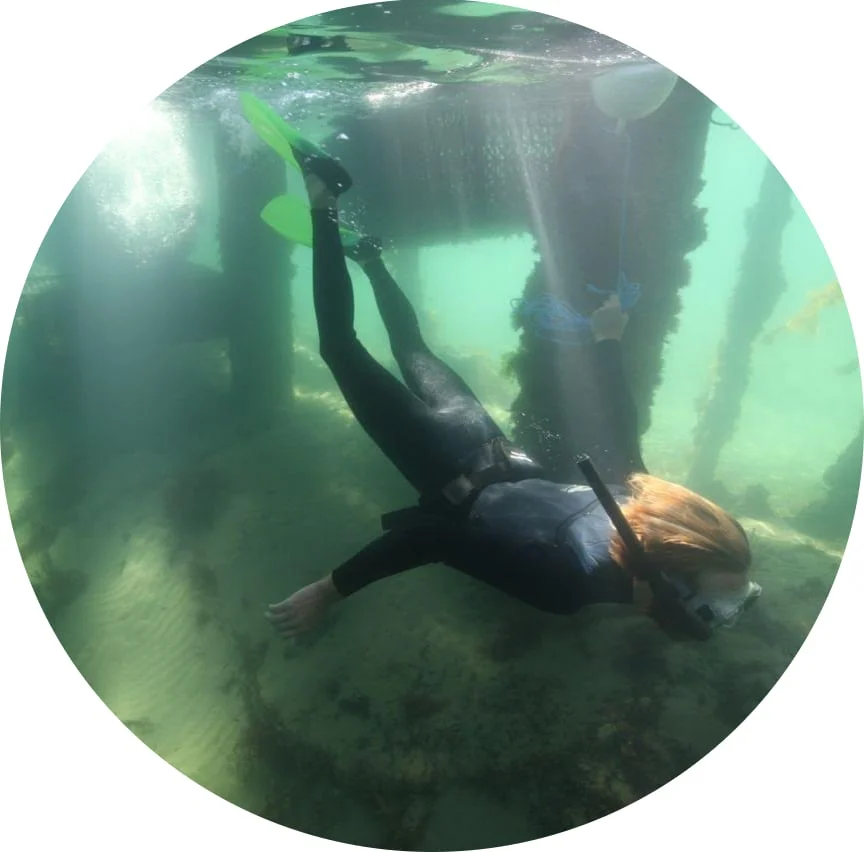
Port Phillip and Western Port support a range of highly important ecosystems and habitats, a diverse range of animals and plants, and provide environmental, social and economic benefits to Victorians.
Two Bays began in 2006 as a response to a simple provocation: that the future health of our two bays depends entirely on how we use and manage our catchments — and that catchment thinking only holds when it's rooted in place, in people, and in long time.
The program developed the first continuous multi-year dataset spanning both bays — covering water quality, microplastics, marine pests, acoustic ecology and climate signal — while simultaneously delivering a curriculum co-designed with Kulin Traditional Owners and partner primary schools.
"All roads lead to Rome — but all catchments lead to the ocean."
Two Bays provides a unique opportunity for bay managers and stakeholders to build knowledge, engage coastal communities, form partnerships to better understand and protect bay values, and to highlight our links with bay health.
The program has created a unique curriculum based on the science and traditional knowledge of both bays, working with Catholic primary schools to integrate Ocean Literacy into their school curriculum.
Saltwater Projects has always endeavoured to reflect, be respectful of, and include at the heart of our work the deep-time knowledge and daily reality of Aboriginal sovereignty on Sea Country.
In practice, this means working directly with Traditional Owners in every part of Australian waters we have been privileged to sail. For Two Bays, this means an ongoing relationship with the Boonwurrung Foundation, VACCA, and Youthworx — organisations rooted in Kulin culture and community.
Focus areas include marine pests, acoustic ecology, Ocean Literacy, water quality (microplastics), and climate change — always framed within the cultural context of Sea Country.